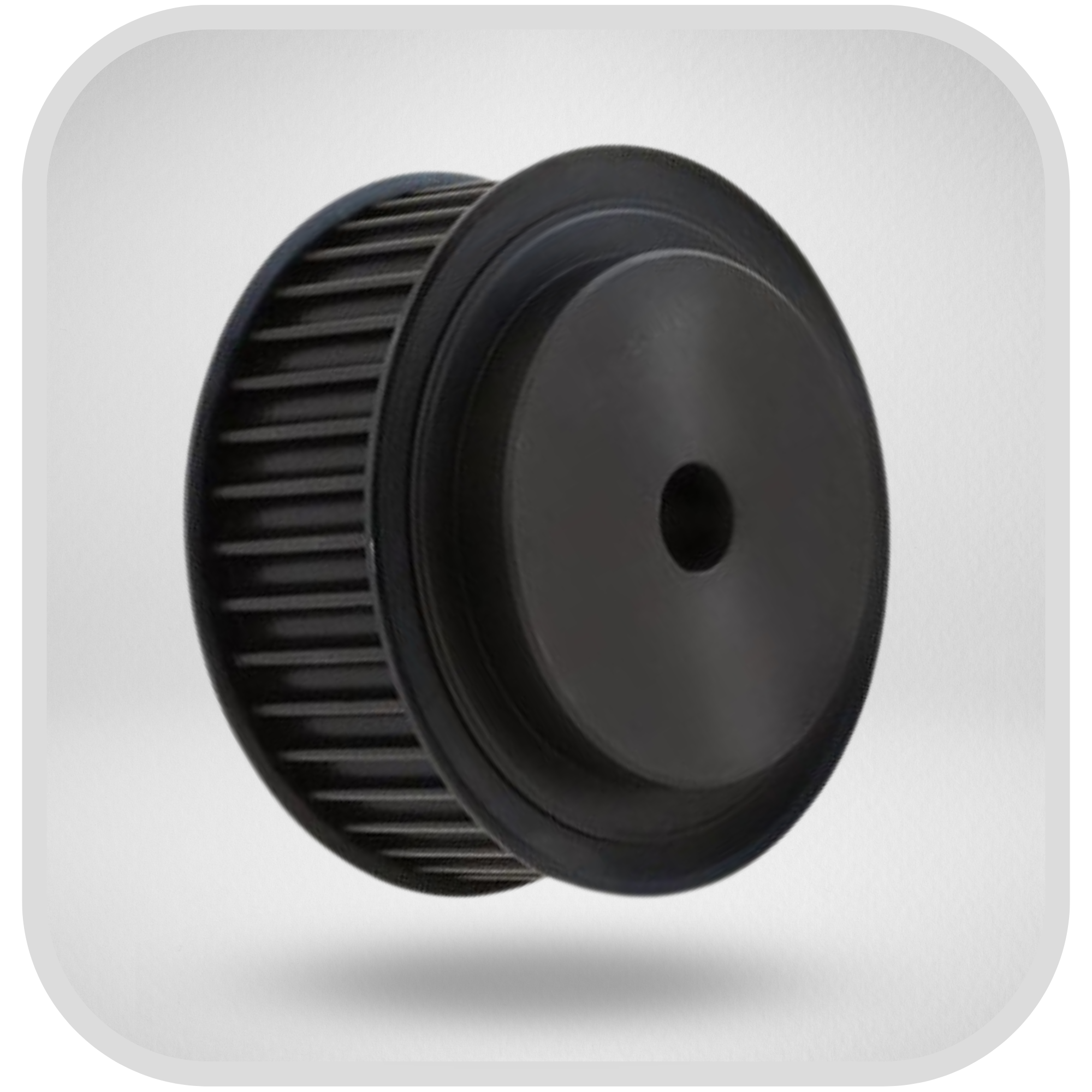
Trapezoidal Pulleys Buying Guide

Looking for a V-belt?
Our buying guide is here to help you make the right choice.
Choose the perfect belt for your needs.
The purpose of this guide is to show you the different types of belts available on the market.
It includes detailed technical information and advice to help you choose the right belt for your application and budget.

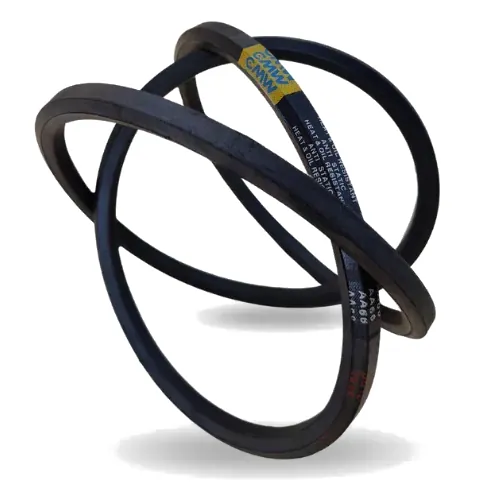
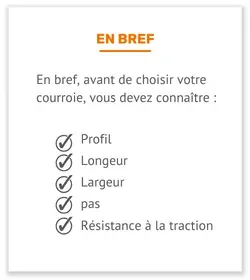
Looking for a V-belt?
Our buying guide is here to help you make the right choice.
Choose the perfect belt for your needs.
The purpose of this guide is to show you the different types of belts available on the market.
It includes detailed technical information and advice to help you choose the right belt for your application and budget.
I. Why choose a trapezoidal pulley with a solid hub? cast iron and aluminum

Design:
Solid hub pulleys are pulleys designed with a solid hub that passes completely through the pulley. The solid hub is an integral part of the pulley, and can be designed for keyed, screw-tightened or other fastening methods.
Solid-hub trapezoidal pulleys are generally made of metal, aluminum or cast iron, depending on application needs and strength requirements.
Features :
- No relative movement: As the hub is integral with the pulley, there is no risk of relative movement between the hub and the pulley, which can be important in certain applications.
- Strength and durability: Due to their one-piece construction, solid-hub pulleys are generally very strong and durable. They can withstand heavy loads and demanding operating conditions.
- Installation of solid-hub pulleys can be more complex than that of removable-hub pulleys, as they generally require precise adjustment on the shaft.
Applications :
Solid hub pulleys are commonly used in applications where robustness, stability and reliability are essential. These may include conveyor systems, industrial machinery, heavy equipment, construction machinery, etc.
I. Why choose a trapezoidal pulley with a solid hub? cast iron and aluminum
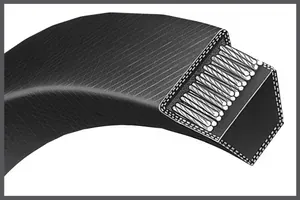
Design:
Solid hub pulleys are pulleys designed with a solid hub that passes completely through the pulley. The solid hub is an integral part of the pulley, and can be designed for keyed, screw-tightened or other fastening methods.
Solid-hub trapezoidal pulleys are generally made of metal, aluminum or cast iron, depending on application needs and strength requirements.
Features :
- No relative movement: As the hub is integral with the pulley, there is no risk of relative movement between the hub and the pulley, which can be important in certain applications.
- Strength and durability: Due to their one-piece construction, solid-hub pulleys are generally very strong and durable. They can withstand heavy loads and demanding operating conditions.
- Installation of solid-hub pulleys can be more complex than that of removable-hub pulleys, as they generally require precise adjustment on the shaft.
Applications :
Solid hub pulleys are commonly used in applications where robustness, stability and reliability are essential. These may include conveyor systems, industrial machinery, heavy equipment, construction machinery, etc.
II. Why choose a trapezoidal pulley with removable hub?

Design:
Removable hub pulleys are pulleys designed so that their hub can be detached from the pulley itself. This design allows for relatively simple assembly and disassembly using fastening mechanisms such as screws, keys or other fasteners.
Removable hub pulleys are manufactured in a variety of materials, including metal, aluminum or cast iron, depending on specific application needs and strength requirements.
Advantages :
- Removable hub pulleys are easy to install; the hub can be detached, simplifying maintenance and the assembly process on a shaft or axle.
- These pulleys can often be combined with different types of hubs, offering flexibility according to the needs of the application.
- In a conveying application, a removable hub pulley can be easily cleaned and lubricated. This can help extend pulley life and reduce downtime.
- In an automation application, a removable hub pulley can be easily adapted to shafts of different diameters. This can help simplify machine design and manufacture.
Areas of application :
- Industrial machinery: Removable hub pulleys are commonly used in industrial machinery, such as machine tools, elevators and conveyors. They are used to transmit power and motion between different machine components.
- Conveyor systems: Pulleys with removable hubs are used in conveyor systems to transport materials or products. They are used to wind and unwind conveyor belts.
- Automation equipment: Pulleys with removable hubs are used in automation equipment to transmit power and motion. They are used to drive motors, actuators and other components.
II. Why choose a trapezoidal pulley with removable hub?
Design:
Removable hub pulleys are pulleys designed so that their hub can be detached from the pulley itself. This design allows for relatively simple assembly and disassembly using fastening mechanisms such as screws, keys or other fasteners.
Removable hub pulleys are manufactured in a variety of materials, including metal, aluminum or cast iron, depending on specific application needs and strength requirements.
Advantages :
- Removable hub pulleys are easy to install; the hub can be detached, simplifying maintenance and the assembly process on a shaft or axle.
- These pulleys can often be combined with different types of hubs, offering flexibility according to the needs of the application.
- In a conveying application, a removable hub pulley can be easily cleaned and lubricated. This can help extend pulley life and reduce downtime.
- In an automation application, a removable hub pulley can be easily adapted to shafts of different diameters. This can help simplify machine design and manufacture.
Areas of application :
- Industrial machinery: Removable hub pulleys are commonly used in industrial machinery, such as machine tools, elevators and conveyors. They are used to transmit power and motion between different machine components.
- Conveyor systems: Pulleys with removable hubs are used in conveyor systems to transport materials or products. They are used to wind and unwind conveyor belts.
- Automation equipment: Pulleys with removable hubs are used in automation equipment to transmit power and motion. They are used to drive motors, actuators and other components.
III. Why choose a trapezoidal pulley with removable hub?

Design:
The main feature of a variable-hub pulley is the presence of an adjustable hub inside the pulley. This hub can be moved along the pulley axis to modify the effective diameter of the groove through which the belt or chain passes. Hub adjustment is usually achieved using a mechanism such as a screw, lever or hydraulic device.
Advantages :
- Precise control: Variable hub pulleys offer precise control over output speed, making them ideal for applications where precision is crucial.
- Vibration reduction: Variable diameter pulleys can help reduce vibration in a drive system. This is because the groove profile is softer than that of a standard grooved pulley. This allows the belt to slide more easily over the pulley, reducing vibration.
- Durability: These pulleys are generally well built to withstand variable loads and frequent adjustment. This is because the groove profile is more resistant to wear.
Applications:
Industrial power transmission systems, including fans, compressors and generators, can use variable-diameter pulleys to optimize operating speed according to load conditions.
Test and measurement machines, used in laboratories or industrial environments, can use variable-diameter pulleys to adjust speed for precise tests or measurements.
Machine tools, such as lathes and milling machines, use variable-diameter pulleys to adjust the speed of the cutting tool to suit the material to be machined and the type of cut.
III. Why choose a variable-diameter trapezoidal pulley?
Design:
The main feature of a variable-hub pulley is the presence of an adjustable hub inside the pulley. This hub can be moved along the pulley axis to modify the effective diameter of the groove through which the belt or chain passes. Hub adjustment is usually achieved using a mechanism such as a screw, lever or hydraulic device.
Advantages :
- Precise control: Variable hub pulleys offer precise control over output speed, making them ideal for applications where precision is crucial.
- Vibration reduction: Variable diameter pulleys can help reduce vibration in a drive system. This is because the groove profile is softer than that of a standard grooved pulley. This allows the belt to slide more easily over the pulley, reducing vibration.
- Durability: These pulleys are generally well built to withstand variable loads and frequent adjustment. This is because the groove profile is more resistant to wear.
Applications:
Industrial power transmission systems, including fans, compressors and generators, can use variable-diameter pulleys to optimize operating speed according to load conditions.
Test and measurement machines, used in laboratories or industrial environments, can use variable-diameter pulleys to adjust speed for precise tests or measurements.
Machine tools, such as lathes and milling machines, use variable-diameter pulleys to adjust the speed of the cutting tool to suit the material to be machined and the type of cut.
- Why do pulleys come in different shapes?
Pulleys can be designed for light or heavy loads, depending on the shape of the groove and the manufacturing material. Pulleys for light loads may have shallower grooves, while those for heavy loads will have deeper grooves and a more robust construction.
In other words, the shape of a pulley is determined by the needs of the application. Even if two pulleys have similar dimensions, their shape can vary to meet specific requirements such as friction reduction, precise load alignment, uniform load distribution or the management of light or heavy loads.

Arm pulley

Canvas pulley without mirror

Canvas pulley with mirrors
PLEASE NOTE:
You need to choose the hub to couple your pulley to the shaft in question. To do this, refer to the "How to choose a removable hub" guide
Note: in a mechanical pulley/belt connection, the speed is unchanged when both pulleys have the same pitch diameter. Therefore, to change speed, the pulleys must have different pitch diameters. In such cases, the reduction ratio R is calculated and used to determine the output speed (R < à 1 = réduction de vitesse et R > to 1 = speed increase).
By following these tips, you should be able to choose the belts that are best suited to your application, and that operate safely and efficiently.
If you have any questions or comments on this definition, please use this form. Thank you in advance!