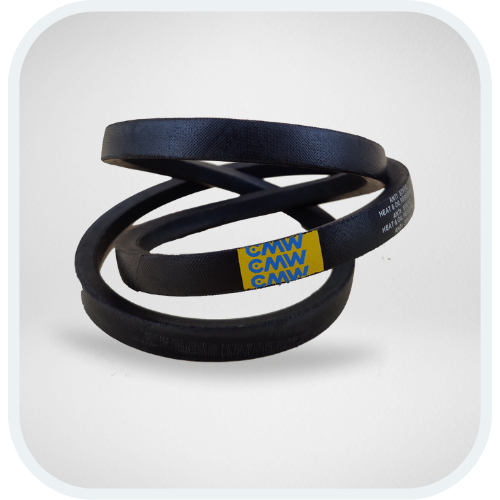
Thoothed belt buying guide
_cropped_400_400.webp)
Are you looking for a durable, reliable and affordable timing belt?
Our shopping guide is here to help you choose your timing belt
Choose the perfect timing belt for your application
It includes detailed technical information and advice to help you choose the right belt for your application and budget.
I. Why choose an inch pitch synchronous belt?
_cropped_300_200.webp)
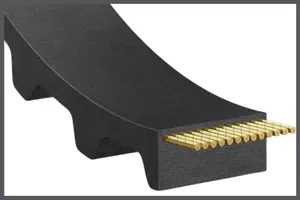
Design:
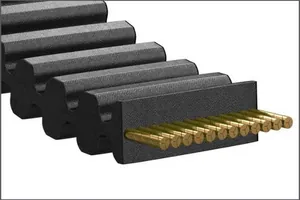
The inch timing belt consists of a fiberglass reinforcement and a neoprene rubber cover. It is coated with a nylon fabric to prevent tooth wear and ensure a low coefficient of friction.
Advantages :
These belts offer the advantage of slip-free transmission with high efficiency.
They offer more precise power transmission and greater durability than rubber belts and chains.
They are also easier to install and quieter.
Applications:
These are the first timing belts to be used where precision timing and low torque retention are required.
What's the difference between an inch-pitch timing belt and a metric-pitch timing belt?
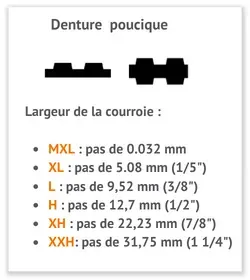
A metric-pitch timing belt measures the spacing between teeth in millimeters, while an inch-pitch timing belt measures the spacing between teeth in inches. Metric-pitch timing belts are more common in industrial applications, while inch-pitch timing belts are more common in domestic applications.
I. Why choose an inch pitch synchronous belt?
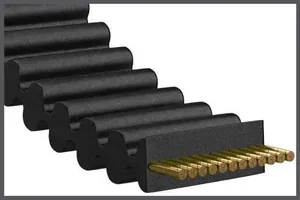
Design:
The inch timing belt consists of a fiberglass reinforcement and a neoprene rubber cover. It is coated with a nylon fabric to prevent tooth wear and ensure a low coefficient of friction.
Advantages :
These belts offer the advantage of slip-free transmission with high efficiency.
They offer more precise power transmission and greater durability than rubber belts and chains.
They are also easier to install and quieter.
Applications:
These are the first timing belts to be used where precision timing and low torque retention are required.
What's the difference between an inch-pitch timing belt and a metric-pitch timing belt?
A metric-pitch timing belt measures the spacing between teeth in millimeters, while an inch-pitch timing belt measures the spacing between teeth in inches. Metric-pitch timing belts are more common in industrial applications, while inch-pitch timing belts are more common in domestic applications.
II. Why choose an HTD synchronous belt?
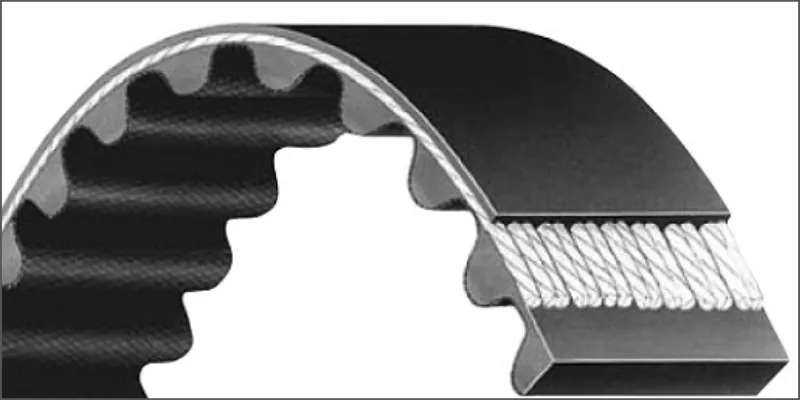
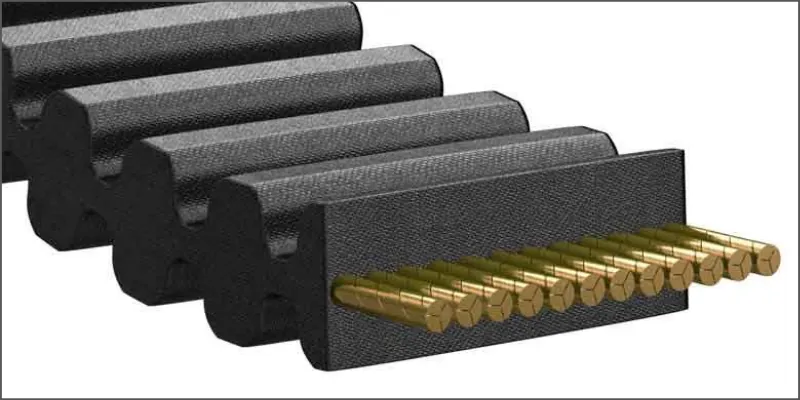
Design:
The HTD synchronous belt is a rubber timing belt known for its precision, high speed and low inertia
It is designed with a flat profile for maximum, precise power transmission. It also offers low noise and good resistance to heat and vibration.
Advantages :
High reliability and long service life
Handles higher speeds and heavier loads
Quieter and easier to maintain
Power savings and reduced energy consumption
Applications :
food processing units (agri-food); pumps and fans; conveying systems; industrial machinery and handling systems.
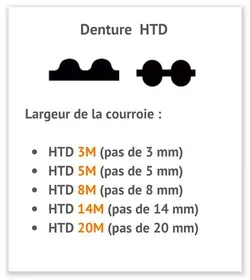
II. Why choose an HTD synchronous belt?
Design:
The HTD synchronous belt is a rubber timing belt known for its precision, high speed and low inertia
It is designed with a flat profile for maximum, precise power transmission. It also offers low noise and good resistance to heat and vibration.
Advantages :
High reliability and long service life
Handles higher speeds and heavier loads
Quieter and easier to maintain
Power savings and reduced energy consumption
Applications :
food processing units (agri-food); pumps and fans; conveying systems; industrial machinery and handling systems.
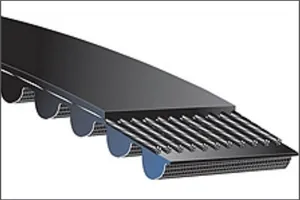
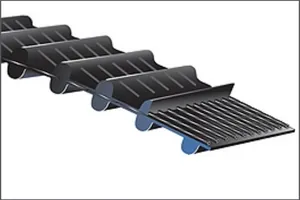
Design:
The belt is designed to offer excellent flex life and high resistance to elongation. Its neoprene body protects against dirt, grease, oil, moisture and other contaminants, while the nylon tooth coating provides a durable wear surface.
Advantages:
Economical, maintenance-free solution
Range includes models that extend to minimal drives
Quiet, vibration-free operation
High tensile strength and breaking strength
Areas of application:
For high-performance, low-maintenance applications: machine tools, molding machines or metal-processing machines. They can also be used for pumps, compressors, electric motors and conveyors.
These belts can directly replace most standard HTD rubber synchronous belts.
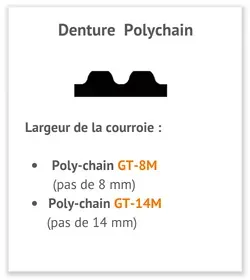
III Why choose a Powergrip synchronous belt?
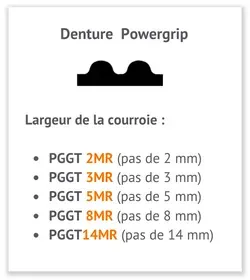
Design:
The belt is designed to offer excellent flex life and high resistance to elongation. Its neoprene body protects against dirt, grease, oil, moisture and other contaminants, while the nylon tooth coating provides a durable wear surface.
Advantages:
Economical, maintenance-free solution
Range includes models that extend to minimal drives
Quiet, vibration-free operation
High tensile strength and breaking strength
Areas of application:
For high-performance, low-maintenance applications: machine tools, molding machines or metal-processing machines. They can also be used for pumps, compressors, electric motors and conveyors.
These belts can directly replace most standard HTD rubber synchronous belts.
IV. Why choose a Polychain GT carbon synchronous belt?

Design:
The teeth and body of these belts are made of lightweight polyurethane, designed to provide a good grip on ropes and fabric. Polyurethane is an effective means of strengthening the belt and protecting it against wear and chemicals.
Aramid ropes offer high power transmission capacity.
Advantages:
Belt tension remains virtually unchanged over the entire life of the belt.
Possibility of adding external rollers
Energy-saving and environmentally friendly
Areas of application :
Industrial equipment (mining, construction, food and beverage, wood, paper, textile), transport equipment, lifting and handling equipment, agricultural and forestry equipment, machine tools, vehicles, motorcycles ... and many more
IV. Why choose a Polychain GT carbon synchronous belt?
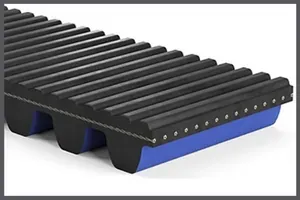
By following these tips, you should be able to choose the belts that are best suited to your application, and that operate safely and efficiently.
If you have any questions or comments on this definition, please use this form. Thank you in advance!